my-cumbria-logo, my-cumbria-logo Toggle navigation

Medical Health

It’s really important to look after your health and wellbeing while you are at university. Find out where to access healthcare and get support.

  • Registering with a doctor.

    A General Practitioner or GP is a doctor who provides general medical treatment.

    To speak to a GP, you need to register as a patient with a GP surgery first. You may be able to register online but you may need to call, email or visit the surgery to register.

    Once you have registered, contact your GP surgery to book an appointment.

    GP surgeries have set opening times. They are not usually open at the weekend.

    The area served by a GP surgery is a catchment area. Surgeries usually accept new patients within their catchment area, but not always.

    To find your local gp surgery, click this link.

  • Registering with a dentist.

    If you are entitled to NHS treatment, search for an NHS dentist near you.

    NHS dental care is for clinically necessary treatment.

    You will pay fixed charges for NHS dental treatment, unless you qualify for dental charge exemption.

  • NHS 111

    If you’re unwell and think you need to see a doctor or dentist but are not registered yet, or it is outside surgery hours, you can call the NHS on 111.

    You can also call 111 for information about prescriptions when you can’t speak to your GP.

    You might need to know:

    • where to get an emergency supply of your prescribed medicine
    • how to get a repeat prescription.
  • Meningitis and Septicaemia

    University life involves a lot of close mixing in confined environments like halls and lecture theatres, making it easy for infections to spread

    What is Meningitis?

    Meningitis is an infection of the protective membranes that surround the brain and spinal cord (meninges). It can affect anyone, but is most common in babies, young children, teenagers and young adults. Meningitis can be very serious if not treated quickly. It can cause life-threatening septicaemia (sepsis) and result in permanent damage to the brain or nerves. A number of vaccinations are available that offer some protection against meningitis. Find out more at https://www.nhs.uk/conditions/meningitis/

    What is Septicaemia?

    Septicaemia or Sepsis is life threatening. It can be hard to spot. There are lots of possible symptoms. They can be like symptoms of other conditions, including flu or a chest infection. If you think you or someone you look after has symptoms of sepsis, call 999 or go to A&E. Trust your instincts.

     Find out more at https://www.nhs.uk/conditions/sepsis


    Spot the Symptoms

    Infectious diseases can progress quickly. Know what to look for:
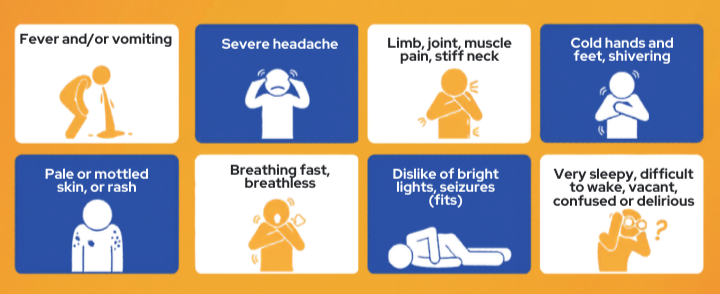
    Symptoms of Meningitis Poster, Symptoms of Meningitis Poster

    Reducing the Spread of Infection

    There are simple things students can do to reduce the spread of infection. Follow NHS advice by: 

    • Get Vaccinated: Make sure you have your vaccines if eligible. 
    • Fresh Air: Let in fresh air when meeting others indoors. 
    • Hand Washing: Washing your hands regularly especially after using the toilet and before eating/preparing food. 
    • Cover Up: Cover your coughs and sneezes. 

    Face masks can still be used in all crowded settings. In accommodations, keep bedrooms and common rooms clean and well aired. 

     

  • International Students - access to health services in the UK

    The NHS is the UK's state health service which provides treatment for UK residents through a wide range of health care services. Some services are free and some have to be paid for.