
What is Domestic Abuse and Coercive Control?
-332x193.jpeg)
Whether you’re a student or a staff member, any form of domestic abuse or coercive control is never okay and is not tolerated at the University of Cumbria, as is covered in our University Inclusivity Statement. If you experience any form of domestic abuse, coercive control, bullying, harassment, stalking or sexual misconduct, then we encourage you to report your concerns to You Report, We Support.
Please note: Your report will not trigger a formal complaints process, and the advisor can confidentially speak to you about both your reporting and support options. You will never be forced to submit a report to the police, or a Formal Complaint to the University - as this is your choice.
- What is Domestic Abuse?
- What is Coercive Control?
- Affected By Domestic Abuse of Coercive Control?
- Want To Speak To Someone About Your Options?
- Formally Report What Happened
- Looking For Emotional or General Support?
- Do Nothing
Domestic abuse is defined as any incident or pattern of incidents of controlling, coercive, threatening behaviour, violence or abuse between those who are, or have been, intimate partners or family members regardless of gender or sexuality.
This can include, but is not limited to:
Psychological; Physical; Sexual; Financial; and/or Emotional abuse.
Psychological abuse
This is usually through isolation, derogatory comments, threats and restrictions. Gaslighting is a type of psychological abuse used in coercive control that aims to make someone feel unsure of themselves, their recollection of events that have happened, and their own perceptions. It uses lying, denial of events and misleading statements to invalidate their perception of things. It can be reactive, or purposefully orchestrated, with some abusers going to extreme lengths to stage events that will confuse the victim.
Emotional control
Emotional control is carried out by using emotions to humiliate, manipulate, blame and critique someone. The aim of this type of abuse is to wear away at their confidence and self-esteem. Perpetrators might play on emotions to make unfair and unreasonable requests and diminish boundaries so that the victim dedicates all their time to them. Emotional abuse also includes bullying the person into sharing a viewpoint, invalidating upsetting events because the victim cannot remember the exact time and place that they occurred, and never being pleased with the victim’s actions. They may relay that their jealousy is a form of love.
Blackmail
This incorporates elements of psychological and emotional control but uses specific events or materials to coerce someone into submission. An example of this is revenge porn. A partner or ex-partner might threaten to release intimate images of you if you don’t follow through on something they have asked you to do. In some cases, blackmail doesn’t involve a threat of something involving the victim, but the victim can think they have done something wrong when they have not, and submit to the offender’s wishes in order for it not to be exposed.
Sexual Coercion
This is when sexual activity is unwanted but occurs because one is non-physically pressured, tricked or intimidated into participating. For example, a partner might tell you that you owe them a sexual favour as they have done something for you. It can also be in the form of repeated demands for sex, pestering and harassing you to give in.
Economic Sanctions
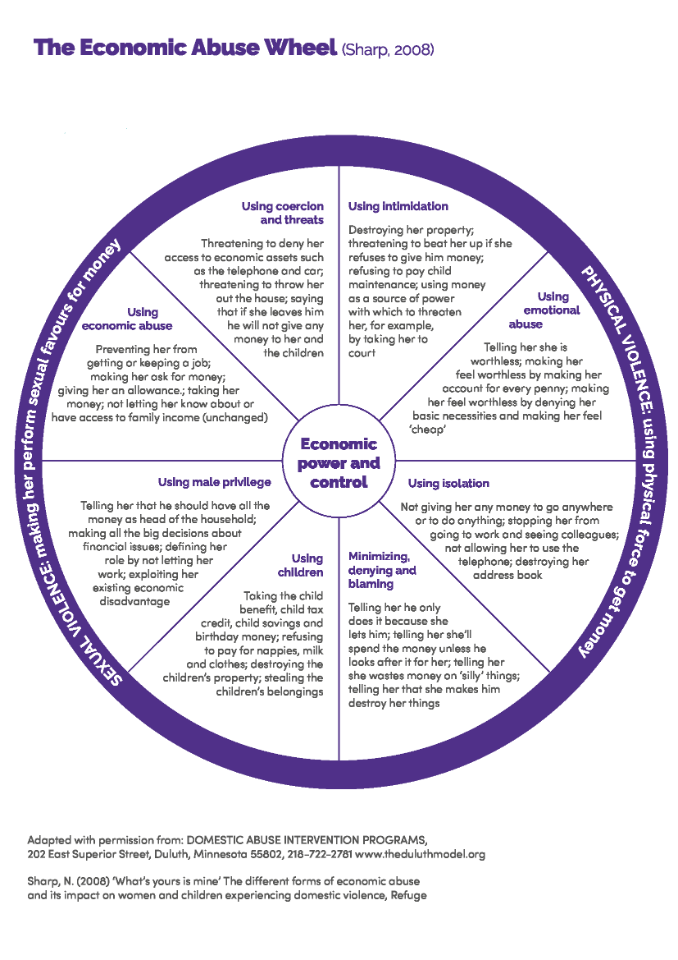
This entails the perpetrator orchestrating financial sanctions when they don’t get their own way. This could start with small ‘fines’, and progress to taking away the person’s entire financial freedom. For examples of Economic abuse, explore the infographic below:
Please note: the graphic of the Economic Abuse Wheel is included in it’s original format to provide further insight, noting that we recognise people of any gender identity can experience abuse.
If you, or someone you know, have been affected by Domestic Abuse of Coercive Control, it may be hard to know what to do or how to feel. That's okay.
What happened was not your fault, you're not alone, and what you do next will always be your choice.
Are you in Immediate Danger?
You Report, We Support is not an emergency reporting tool.
If you are in immediate danger or seriously injured:
- Contact the Emergency Services on 999
Alternatively, if you are on campus you can call
- On Campus Security: Lancaster 07809 190566, Carlisle 07809 190530, Ambleside 07809 190531
If you are Deaf, deafened, hard of hearing or have a speech impairment, a Text Phone is available on: 18000
Find a Safe Space
- Find a Safe Space: try to find a space which makes you feel most comfortable and safe from harm.
- You may find it useful to think about what is meant by bullying and harassment, and examples of these behaviours.
If you are not in immediate danger, currently feel safe from harm and do not need to report an emergency - then speaking to someone about your options is a great place to start.
-
Report an incident: If you submit a report with details, a member of the Student Services team will be in touch soon. Your report will not trigger a formal complaints process, and the advisor can confidentially speak to you about both your reporting and support options. You will never be forced to submit a report to the police, or a Formal Complaint to the University- as this is your choice.
-
The University of Cumbria Student's Union can provide support, advocacy and advice to students even if they do not wish to report.
-
If you are a member of staff and have opted to join one of the three unions recognised by the University; UCU, Unite and UNISON, they will be able to offer advice, advocacy and support. All help and advice from unions is independent of the University of Cumbria.
-
ACAS: gives employees and employers free, impartial advice on workplace rights, rules and best practice.
- Citizens Advice: give people the knowledge and confidence they need to find their way forward - whoever they are, and whatever their problem.
It is entirely within your right to formally report. You can formally report something to the University and/or the police if it constitutes a criminal offence.
-
Report an Incident: If you submit a report with details, a member of the Student Services team will be in touch soon. Student Services advisors can help outline your formal reporting options, as well as describing what these processes might look like and what an investigation would entail.
We would strongly advise seeking the support of a Student Services Advisor if you wish to report something to the police.
- Report Harassment to the Police: Domestic abuse and coercive control are recognised under the Domestic Abuse Act 2021 and under section 76 of the Serious Crime Act 2015 and are therefore considered criminal offences. This means that someone can be prosecuted in the criminal courts if they repeatedly or continuously behave in a controlling, coercive or violent way towards someone they are personally connected to, and the behaviour has a serious effect on that person. For more detailed information and guidance related to domestic abuse and coercive control, please refer to the official documents provided by the UK government and Crown Prosecution Service.
If you would like to speak to someone about how the incident(s) has emotionally affected you, or you would like to use some of the support services below for self-care, that is okay.
- Report an Incident: If you submit a report with details, a member of the Student Services team will be in touch soon. Please remember that submitting a report with details through Report and Support, means that someone will be able to personally talk you through your support options and tailor advice to your needs. You will never be forced to submit a formal report.
- Wellbeing Support Services: The University’s dedicated wellbeing services can support you with practical and emotional issues impacting your wellbeing or mental health and aspects of University life, including referrals for counselling and psychology support.
- Students’ Union: Is the SU's Advice Centre with expert staff who can provide support, advocacy and advice to students even if they do not wish to report.
- Personal Tutors: If your studies have been affected by an incident, your personal tutor could help to explain your options with regards to academic support.
- Togetherall: Both students and staff can access the online community, which supports populations with their mental health and wellbeing – helping with feels of anxiety, depression, isolation and stress, to relationship problems and lifestyle challenges. Togetherall have a network of trained professionals providing 24/7 support around the world.
- Women's Aid: A national charity for all women who have survived domestic abuse and our members who support them. As a national charity we have an important role to play in representing diversity. We understand that abuse and lack of access to support is compounded by racism, homophobia and disability. We work to promote and deliver safe and inclusive services.
- Respect: Men's Advice Line: Men’s Advice Line is a confidential helpline and webchat service for men including those who identify as trans and non-binary, who are victims of domestic abuse. They offer emotional support, advice, information and signpost to other vital services that help victims keep themselves (and their children) safe.
- Galop: Galop is the UK’s LGBT+ anti-abuse charity. They work with and for LGBT+ victims and survivors of abuse and violence.
- Birchall Trust: A local Lancashire/South Cumbria charity supporting survivors of rape, sexual abuse, or sexualised violence.
- Safety Net: A free service supporting the recovery of those affected by rape, exploitation, sexual and domestic abuse in Cumbria.
It is okay not to want to do anything at this moment in time. It is entirely your choice.
If you ever change your mind, just know these support pages will be here to help direct you towards whichever option you wish to pursue.
Looking For Further Information?
The page references a range of national bodies and local groups who are committed to community engagement, social justice and more. This collection aims to empower students and staff with knowledge, foster inclusive practices, and provide pathways for support and action. It reflects the university’s broader mission to create a welcoming, equitable environment for all.